
The first time I ever scrubbed in for surgery, I was in an operating room at Clínica del Sur, a hospital in La Paz, Bolivia, watching over a surgeon's shoulder as he worked on a child's hand. I traveled there with a visiting team from ReSurge International, a nonprofit that has spent decades increasing global access to free reconstructive surgery, with repairs ranging from cleft lip and palate to burns, congenital hand conditions, and injuries. To leave communities stronger than before, they train local surgeons and care teams to carry the work forward after they leave.
I came through Doximity's Doxers Without Borders program. These trips need all kinds of hands, and by the end of the week I found where mine fit.
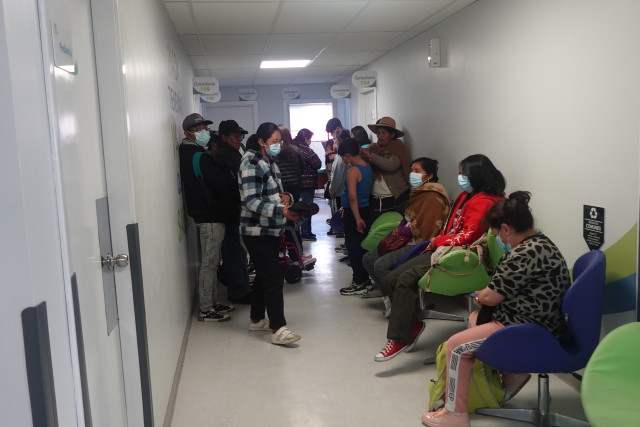
Seventy Patients in a Single Day
Specialized hand and reconstructive surgery is scarce in Bolivia, especially for complex cases, so patients who need it often have nowhere to turn. On our first day, that reality walked through the door about seventy times over. Patients came from all over the country, from La Paz and El Alto, but also from Cochabamba and Santa Cruz, some of them on the road the better part of a day just to be seen.
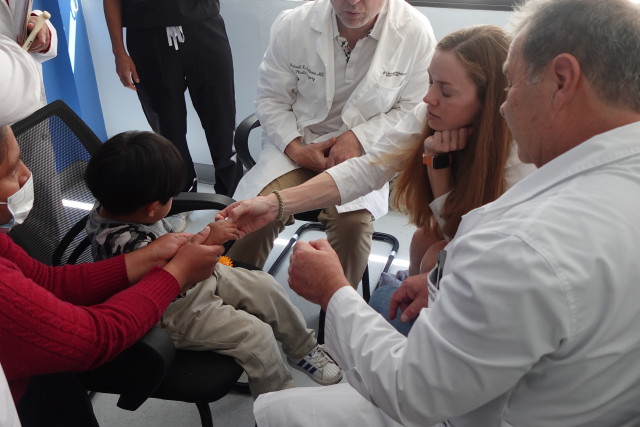
Many were children born with hand conditions, like syndactyly, where the fingers are fused together, or polydactyly, an extra finger. Others carried burns or injuries from accidents. The kids with Apert syndrome stayed with me the most. It is a complex condition that many clinicians will not take on, and their families traveled a long way knowing this was likely their one real chance to receive this kind of care. A panel of U.S. surgeons and a local hand surgeon saw each patient together and decided who needed an operation, who should start with hand therapy to build strength first, and who therapy alone could help the most. Sitting in that room, it was impossible not to feel the weight of what simply showing up made possible.
Hands Teaching Hands
What surprised me most about the week was how little of it focused on any one surgeon's hands. Our surgeons, Dr. Ellen Satteston and Dr. Michael Matthew, spent the whole time operating alongside the local hand surgeon and walking him and the team through every step. The same was true on the anesthesia side with Dr. Sonia Mehta, and in the therapy room with our hand therapist, Jyotsna Supnekar.
The point was never to fly in, fix a handful of cases, and leave. It was to make sure the skill stayed behind after we flew home.
I scrubbed in for the first time in my life to watch some of this up close. These operations change a child's whole future: releasing fused fingers so a hand can open and grip, or rebuilding a hand so a kid can write, hold things, and not get singled out at school. What made it land was seeing a visiting surgeon and a local one leaning over the same hand, trading technique.
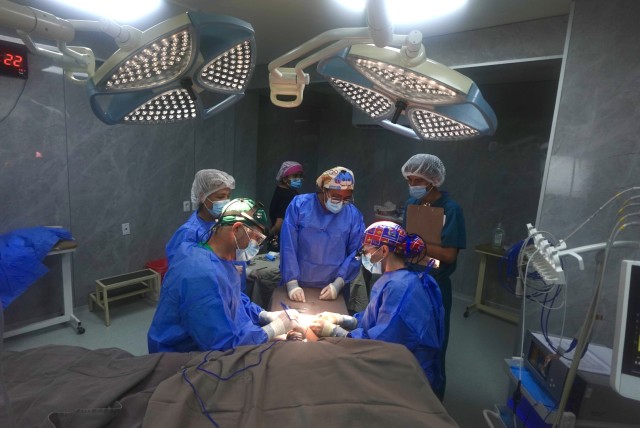
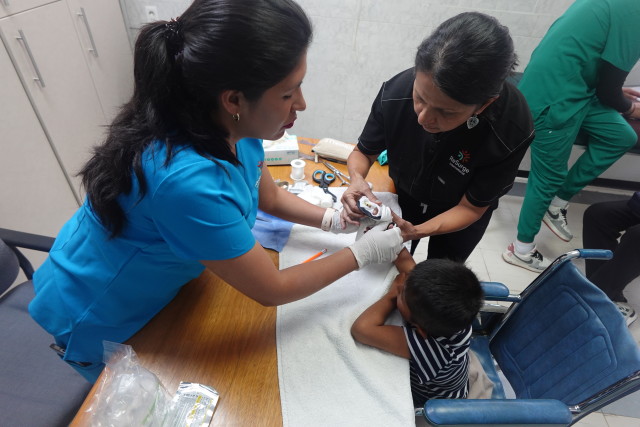
That partnership is also how I came to follow one patient through her entire journey. I first saw her at the screening clinic, then in the operating room for her surgery and skin graft, and later in the therapy room being fitted for her splint. You almost never get to watch the whole arc like that. Seeing both teams hand her off at each step told me everything about how this work actually holds together.
Sunshine, Salteñas, and the Lord of the Rings
For all the clinical skill in those rooms, what I keep returning to are the small, human things.
Early in the week, Dr. Mehta picked up a baby about to go under, held him close, and sang "You Are My Sunshine" until he fell asleep. I teared up watching it.
In the therapy room, Jyotsna and her local counterpart Daniela Marco Cardozo shaped custom splints by heating a special plastic right onto each patient's hand, a material the clinic cannot get locally, so every sheet of it had come down in someone's luggage. There was a boy there who was mortified about his new finger splints, right up until his friends started calling him Lord of the Rings, and the nickname stuck in the best way. When I mentioned that moving his fingers more would help him heal, he asked if video games counted, and I got to tell him yes.
And the gratitude was everywhere. One woman came back after their visit with a bag of salteñas for everyone, still warm.
What I Could Offer Was Language
I am not a clinician. I work in communications, and for most of the week my job was simply to help wherever I could. I didn't expect the most useful thing I had to offer would be language. Speaking Spanish meant I could sit with patients and hear their stories, calm a nervous kid before a procedure, and help the visiting and local teams understand each other in the moments that mattered most. It let me be part of the care, not a visitor watching from the back of the room.
A lot of these patients were working around school, or around a single day they could afford to take off from work. Talking with them directly is how I came to understand how much this care cost them to pursue, and how much it meant.
What I Carried Home
For me, this was a once-in-a-lifetime kind of week, and I am not sure I have fully landed from it yet. I keep thinking about the families who traveled for days, the surgeons who treated teaching as part of the job, and a baby falling asleep to a lullaby in a language he didn't need to understand.
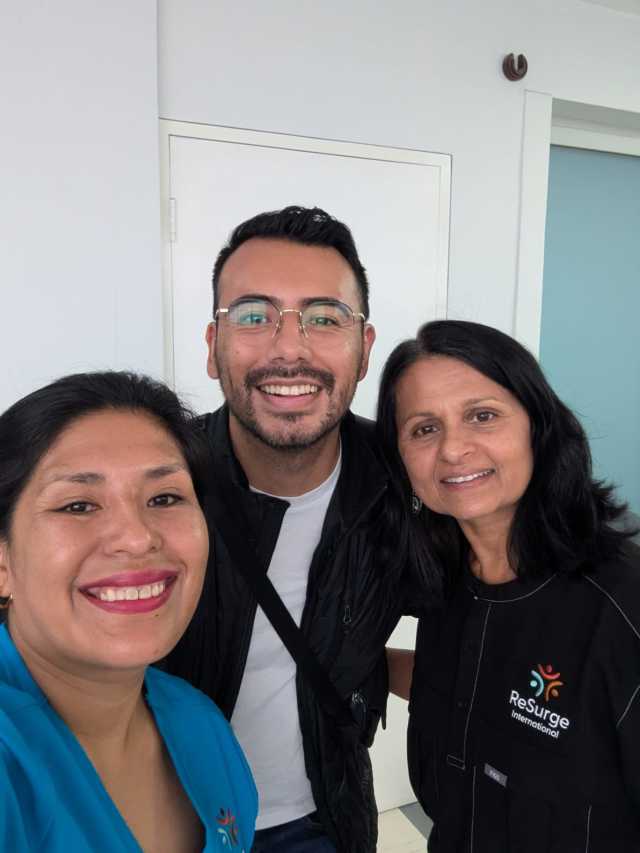
Doximity puts physicians first. Standing beside a team like this one, where their skill changed lives in real time, reminded me why that matters. I came home tired and grateful, carrying a piece of La Paz that I do not expect to set down.